A developer was planning a four-story mixed-use building near the Oceanside harbor, where the coastal geology shifts from beach sand to stiff Pleistocene terrace deposits in less than 10 meters. Without reliable subsurface data, the foundation design was pure guesswork. That's where a properly executed SPT (Standard Penetration Test) becomes essential. By recording blow counts every 60 cm, we map soil density and strength directly, giving structural engineers the numbers they need to size footings or piles. For projects in Oceanside, we often pair the SPT with a granulometry analysis to classify the sand fractions, and when soft clays appear we run an undisturbed sampling program for lab testing.
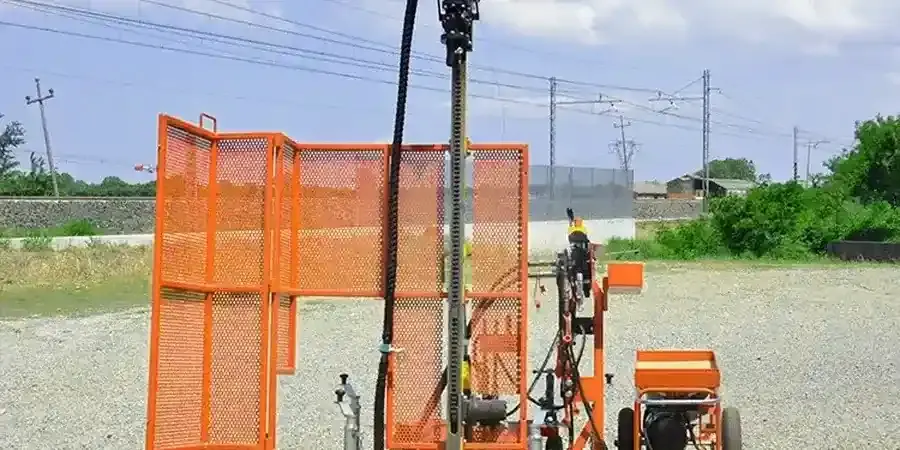
In Oceanside's coastal sands, a single SPT borehole can reveal the transition from loose fill to dense terrace deposits at 8-12 meters depth.
Method and coverage
Regional considerations
Oceanside sits within California's seismic zone, where the San Luis Rey River valley and coastal bluffs create highly variable soil profiles. Loose sand layers can liquefy during a major earthquake, and the groundwater table sits between 3 and 6 meters deep in many areas near the coast. An SPT (Standard Penetration Test) provides the blow-count data needed to evaluate liquefaction potential using the NCEER 2001 method. Without this data, a foundation might be under-designed for seismic loading or over-designed for bearing capacity, both of which waste money or compromise safety. We've seen projects where ignoring shallow loose sand cost owners six figures in retrofit work later.
Process video
Standards that apply
ASTM D1586-18 (Standard Test Method for SPT), IBC 2024 Chapter 18 (Soils and Foundations), ASCE 7-22 Section 11.4 (Site Class from N-values)
Complementary services
Standard SPT Borings
Full-depth boreholes with SPT at 1.5 m intervals, including sample retrieval and field logs. Ideal for residential, commercial, and infrastructure projects needing reliable N-values for foundation design.
SPT with Seismic Cone (SCPTU)
Combines the traditional SPT hammer with a seismic cone to measure shear-wave velocity at the same depth. Provides both N-values and Vs30 data for advanced site response analysis in high-seismic zones like Oceanside.
Typical parameters
Top questions
What is the difference between SPT and CPT?
The SPT uses a hammer to drive a split-spoon sampler, providing a discrete N-value every 1.5 meters. The CPT pushes a cone continuously, recording tip resistance and sleeve friction. SPT is preferred in gravelly soils or where disturbed samples are needed for classification, while CPT gives a continuous profile. Both are valid, but SPT remains the standard in California for liquefaction assessment.
How much does an SPT test cost in Oceanside?
Typical cost for a single SPT borehole with samples and field logs ranges from US$490 to US$780, depending on depth, number of tests, and mobilization distance. Projects requiring multiple boreholes or advanced logging (video, liners) will be at the higher end. Always request a quote with your specific location and scope.
What is the minimum depth for SPT in coastal sands?
In Oceanside's coastal sands, we recommend a minimum depth of 12 meters to cross the loose Holocene deposits and reach the denser Pleistocene terrace sands or bedrock. Shallow tests (under 6 meters) may miss critical layers that control settlement and liquefaction risk.
Can SPT be performed in wet or saturated soils?
Yes, SPT works well in saturated soils, including below the water table. The hammer drives the sampler through water and sand without issue. In clean sands, the N-value may need correction for overburden pressure (N60) to account for the buoyant unit weight. Our field crew records water table depth during drilling.
How long does it take to get SPT results?
Field work for a single borehole typically takes 3-4 hours. Laboratory classification and report preparation add 2-3 business days. For urgent projects, we can supply preliminary N-values within 24 hours of field completion, with the full report following within a week.