Seismic engineering in Oceanside encompasses a comprehensive suite of analysis and design services aimed at protecting structures, infrastructure, and lives from earthquake-induced ground shaking. Situated in Southern California, Oceanside lies within one of the most seismically active regions in the United States, making earthquake preparedness a fundamental aspect of responsible construction and retrofitting. This category covers everything from advanced ground motion assessments to innovative isolation systems, ensuring that buildings, bridges, and industrial facilities can withstand the forces generated by events on the San Andreas, San Jacinto, and offshore fault systems. By integrating services like site response analysis and base isolation seismic design, project stakeholders can address site-specific hazards that generic code provisions might overlook.
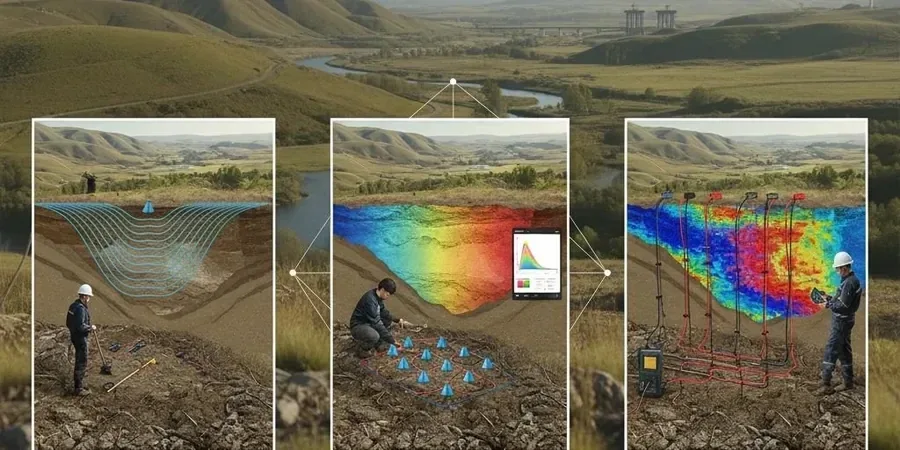
Oceanside’s coastal geology introduces unique challenges that demand specialized seismic attention. The city sits atop a complex mix of Quaternary alluvial deposits, marine terraces, and weathered sedimentary formations, many of which are prone to amplification of seismic waves. Soft soils in the river valleys and near the coastline can significantly increase shaking intensity compared to nearby rock outcrops, a phenomenon that requires rigorous quantification through numerical modeling. Additionally, liquefaction potential in saturated sandy layers beneath the Loma Alta and San Luis Rey floodplains poses a threat of foundation bearing failure and lateral spreading, making site-specific investigations critical for any significant development.
The regulatory framework governing seismic design in Oceanside is rooted in the California Building Code (CBC), which adopts and amends the International Building Code with state-specific provisions. Chapter 16 of the CBC mandates structural analysis using ASCE 7 Minimum Design Loads, requiring determination of site class based on subsurface data and corresponding spectral acceleration parameters. For essential facilities and high-occupancy structures, the code triggers additional scrutiny under the California Existing Building Code and local ordinances that may impose stricter drift limits or peer review requirements. These regulations ensure that new construction and major alterations achieve a minimum level of seismic performance, but proactive owners often pursue enhanced criteria through performance-based design.
Projects that typically require advanced seismic solutions in Oceanside include high-rise residential towers along the Strand, municipal infrastructure such as the water reclamation facility and emergency response centers, and transportation corridors like the Interstate 5 bridges over the San Luis Rey River. Healthcare campuses, including Tri-City Medical Center, demand base isolation or energy dissipation systems to remain operational after a major earthquake. Even smaller commercial developments on infill sites benefit from site response analysis to calibrate foundation demands, while retrofits of older concrete tilt-up warehouses often incorporate base isolation seismic design principles to extend building lifespan and protect inventory. In every case, aligning the structural solution with the site’s geotechnical profile is non-negotiable for resilience.
Common questions
What makes Oceanside's seismic hazard profile different from inland cities in California?
Oceanside faces a combination of threats from offshore faults within the Continental Borderland, the nearby Elsinore and San Jacinto faults, and deep basin effects from soft coastal sediments. The presence of thick alluvial deposits amplifies long-period shaking that particularly affects taller structures, while liquefaction in saturated river valleys adds a foundation hazard less common in inland bedrock sites.
When is a site response analysis required instead of using standard code spectra?
Site response analysis becomes necessary when a project involves soft soil profiles (Site Class E or F), deep sedimentary basins, or near-fault conditions where code-mapped spectral values may not capture local amplification. High-rise buildings, essential facilities, and performance-based designs typically require this analysis to generate site-specific acceleration time histories and response spectra for structural design.
How does the California Building Code address seismic design for existing structures in Oceanside?
The California Existing Building Code (CEBC) governs alterations, additions, and seismic retrofits through tiered compliance pathways. Triggers include substantial structural modifications, change of occupancy, or voluntary retrofit ordinances. The code references ASCE 41 for evaluation and prescribes performance objectives that vary based on the building's risk category and the extent of intervention.
What role does soil liquefaction play in the seismic design process for Oceanside projects?
Liquefaction assessment is a critical early step, particularly in areas underlain by Holocene-age saturated sands with low standard penetration resistance. When triggering is predicted, engineers estimate settlements and lateral spread displacements, then design ground improvement—such as deep soil mixing or stone columns—or select deep foundations with adequate capacity to mitigate the resulting loss of soil strength.