We were working on a retaining wall project near the Oceanside Pier not long ago, and the contractor needed shear strength parameters fast. The native soils there are a mix of marine terrace deposits and alluvial sands, which behave very differently under load. That's when we brought in the direct shear test to get the friction angle and cohesion values required for the design. In Oceanside, where the water table can sit just a few feet below grade, knowing these parameters is critical before you pour any footing. Without them, you are guessing on bearing capacity and sliding resistance. For that project, we also ran a placa de carga to verify modulus of subgrade reaction on site.
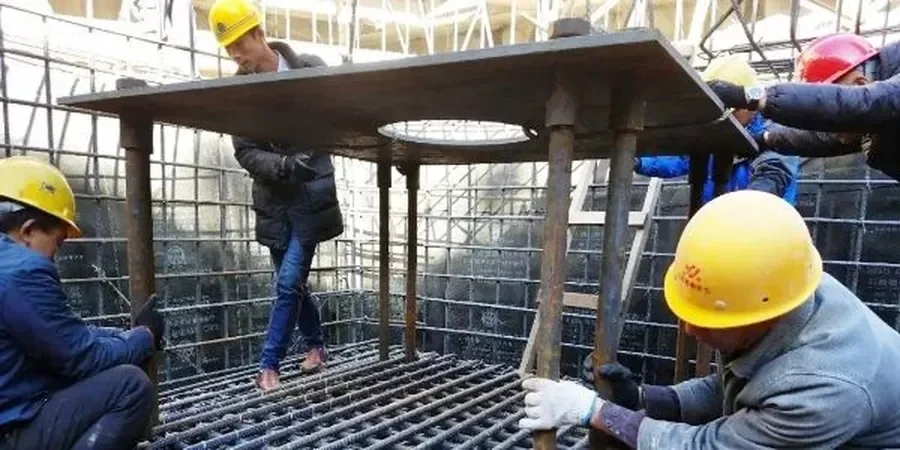
In Oceanside, where the water table sits just a few feet below grade, knowing friction angle and cohesion is critical before pouring any footing.
Method and coverage
Regional considerations
The shear box itself is a simple brass frame split horizontally, but the nuance is in the setup. In Oceanside, we often get silty sands that dilate during shear, giving an unrealistically high peak if we shear too fast. Running the direct shear test at the correct displacement rate—sometimes as slow as 0.01 mm/min for clayey soils—prevents that overestimation. We also check for gravel particles that could skew the results; if a single pebble bridges the shear plane, the test has to be redone. That kind of attention is why local engineers trust our numbers for their slope stability and foundation designs.
Standards that apply
ASTM D3080-11, ASTM D2487 (USCS classification), ASTM D2216 (moisture content), IBC 2021 Section 1806
Complementary services
Consolidated Drained Direct Shear (CD)
Standard test for slow-draining soils like silts and clays. Sample is consolidated under the design vertical stress, then sheared at a rate that allows full pore pressure dissipation. Delivers effective stress parameters c' and phi' for long-term stability analysis.
Consolidated Undrained Direct Shear (CU)
Used when you need total stress parameters for short-term loading, such as during rapid construction fills or temporary excavations. Pore pressures are monitored but not dissipated during shear. Common for embankment stability checks in Oceanside's coastal bluffs.
This service complements our laboratory testing work for a complete project analysis.
Typical parameters
Top questions
What is the difference between direct shear and triaxial test?
Direct shear forces the sample to fail along a predetermined horizontal plane, while triaxial allows failure on the weakest plane. Direct shear is faster and cheaper, making it ideal for routine sands and clays in Oceanside. Triaxial gives more accurate pore pressure data but at higher cost and longer setup.
How much does a direct shear test cost in Oceanside?
A standard direct shear test in our lab runs between $590 and $720 per sample, depending on the number of normal stress stages and whether you need consolidated drained or undrained conditions. Volume discounts apply for projects requiring 10 or more samples.
Can direct shear be used for liquefaction assessment?
No, direct shear is not suitable for liquefaction analysis. Liquefaction requires cyclic loading, which is better evaluated with cyclic triaxial or cyclic simple shear tests. Direct shear measures monotonic strength parameters—useful for slope stability and bearing capacity, not seismic pore pressure buildup.
What sample types do you accept for direct shear in Oceanside?
We accept undisturbed thin-wall tube samples, Shelby tubes, and block samples for cohesive soils, plus reconstituted samples for sands and gravels. Minimum sample diameter is 63.5 mm. Samples from Oceanside's coastal areas often contain shell fragments, which we note in the report as they can affect peak friction angle.