Oceanside's Mediterranean climate, with its dry summers and occasional heavy winter rains from Pacific storms, creates unique challenges for waste containment. The coastal geology here, dominated by Quaternary alluvium and terrace deposits, demands a thorough understanding of how moisture interacts with compacted clay liners and drainage layers. That's why landfill geotechnics in Oceanside must account for seasonal water table fluctuations and the potential for perched groundwater. Before designing a liner system, we correlate soil permeability with in-situ density through permeability laboratory testing to ensure long-term containment performance under these specific coastal conditions.
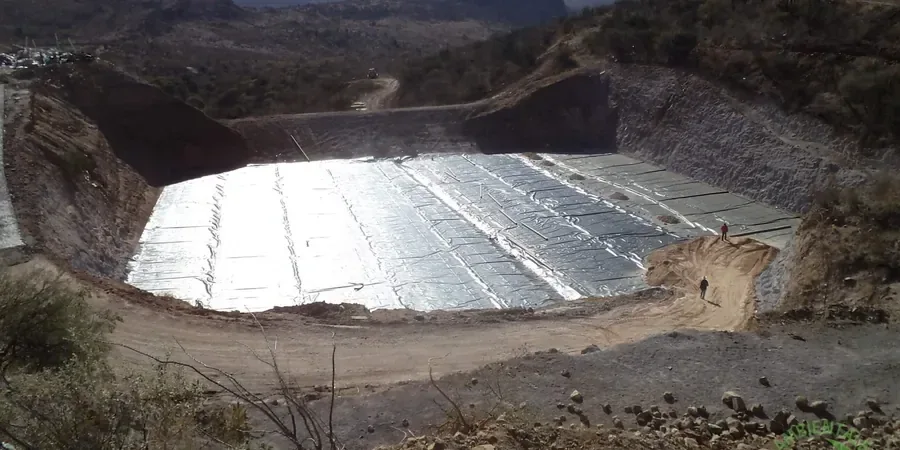
In Oceanside, the interaction between seasonal rainfall and shallow groundwater demands liner systems designed for both wet and dry cycles.
Method and coverage
Regional considerations
We deploy track-mounted drill rigs and backhoes to access Oceanside's landfill sites, many of which are set on gentle hillsides overlooking the coast. The main risk during our field campaign is the presence of undocumented fill — old construction debris or heterogeneous deposits — that can skew test results or create voids. To mitigate this, we sequence our investigation carefully: first a geophysical survey using georradar GPR to map anomalies, then targeted borings at critical locations. This phased approach reduces surprises during the liner construction phase and keeps the project on schedule.
Standards that apply
IBC 2021 (Chapter 18 – Soils and Foundations), ASTM D1586-18 (Standard Test Method for SPT), ASTM D2487-17 (Standard Practice for Classification of Soils), ASTM D698-12 (Standard Test Methods for Laboratory Compaction Characteristics)
Complementary services
Liner System Design & Testing
We design and verify compacted clay liners (CCLs) and geosynthetic clay liners (GCLs) for new cells and expansions. Our team performs in-situ density testing, hydraulic conductivity tests on undisturbed samples, and slope stability analyses to ensure the liner meets regulatory requirements under Oceanside's seismic and hydrologic conditions.
Final Cover & Closure Planning
For landfill closures, we evaluate long-term settlement of waste mass and foundation soils, design the final cover system with proper drainage and erosion control, and specify vegetation adapted to the coastal climate. We also prepare the geotechnical sections of the closure plan for agency review.
Typical parameters
Top questions
What specific tests are required for landfill geotechnics in Oceanside?
The core tests include standard penetration tests (ASTM D1586), Atterberg limits, compaction curves, and triaxial compression tests on compacted clay. Hydraulic conductivity tests on reconstituted samples are essential to verify liner permeability below 1×10⁻⁷ cm/s, and direct shear tests on geosynthetic interfaces help design stable side slopes.
How does seasonal rainfall affect landfill design in this coastal city?
Oceanside receives about 13 inches of rain annually, mostly between November and March. This seasonal pattern means liner systems must be designed to resist desiccation cracking during dry months and maintain low permeability when saturated. Our designs incorporate a moisture-conditioning plan to keep clay liners near optimum moisture content year-round.
What is the typical cost range for a landfill geotechnical investigation in Oceanside?
For a standard landfill cell investigation including 5 to 8 borings, lab testing, and a written report, clients can expect costs between US$2.270 and US$8.620. The final price depends on site accessibility, depth of investigation, and the number of specialized tests required for the liner design.
Which seismic design considerations apply to Oceanside landfills?
Oceanside lies in Seismic Design Category D per IBC 2021, with peak ground accelerations around 0.3g to 0.4g. This requires evaluating liquefaction potential of underlying soils, designing flexible liner systems that can accommodate differential settlements, and including a seismic stability analysis for the waste mass and foundation using pseudostatic methods with a minimum factor of safety of 1.1.