A common oversight among contractors in Oceanside is assuming that standard surface grading alone will keep a foundation dry. The coastal water table here fluctuates seasonally, and without proper subsurface interception, hydrostatic pressure builds against retaining walls and slabs. That pressure leads to cracked footings and differential settlement within months of completion. A tailored geotechnical drainage design addresses this by integrating filter layers, perforated collectors, and outlet systems sized for the site's specific soil permeability. Before specifying any drainage layout, the team runs a permeability laboratory test to determine the saturated hydraulic conductivity of the native sand and clay layers found across Oceanside. That data directly dictates the spacing and depth of the drainage network.
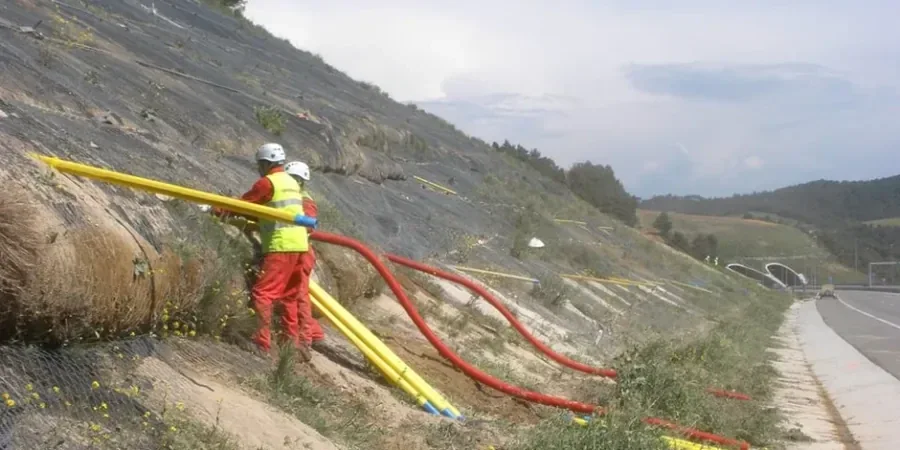
Without subsurface interception, hydrostatic pressure builds against retaining walls and slabs, causing cracked footings within months.
Method and coverage
Regional considerations
The Mediterranean climate of coastal San Diego brings dry summers and intense winter storms. Oceanside averages about 13 inches of rain per year, but nearly all of it falls between November and March. A drainage system designed for average conditions will be overwhelmed during a 50-year event. The real risk is not surface flooding but subsurface saturation that reduces shear strength in the bearing stratum. Clay lenses common in the San Luis Rey River valley can become plastic and lose load-bearing capacity when saturated. That is why geotechnical drainage design in Oceanside must evaluate the worst-case phreatic surface, not the typical one. Overlooking this can turn a small retaining wall into a leaning hazard after one wet season.
Standards that apply
IBC 2018 Section 1805: Subsurface drainage, ASTM D2434: Permeability of granular soils, San Diego County Drainage Ordinance Section 67.802
Complementary services
Subsurface soil logging and permeability testing
Continuous split-spoon sampling and in-situ permeability tests at multiple depths to define the water-bearing layers beneath your site. The data feeds directly into drain spacing calculations.
Retaining wall drainage design
Design of chimney drains, weep holes, and prefabricated drainage boards for basement walls and tiered retaining walls. Includes filter compatibility analysis to prevent clogging by fines migration.
Typical parameters
Top questions
What is the difference between surface drainage and geotechnical drainage design?
Surface drainage handles rainwater that falls on the site using gutters, swales, and catch basins. Geotechnical drainage design controls water that moves through the soil itself—perched water tables, seepage zones, and groundwater flow—using buried perforated pipes, gravel blankets, and filter layers. In Oceanside, where the water table can rise within 5 feet of the surface after heavy rain, subsurface control is essential for long-term foundation stability.
Do I need a drainage design for a hillside lot in the Loma Alta area?
Yes, especially on the steeper slopes of Loma Alta and the San Luis Rey River canyon. Hillside lots in Oceanside are susceptible to lateral seepage that can saturate the downslope fill zone. A geotechnical drainage design intercepts that water before it reaches the building pad, reducing the risk of slope creep and debris flow during winter storms.
How much does a geotechnical drainage design cost in Oceanside?
The typical cost range for a residential drainage design in Oceanside is between US$870 and US$2,850. The final price depends on the number of test pits, laboratory permeability tests, and the complexity of the outlet routing. Larger lots or sites with multiple retaining walls will fall at the upper end of that range.
What happens if the drainage outfall is below the street grade?
If gravity outfall is not feasible, a sump pump system with a backup battery is required. The pump must be sized for the peak inflow rate from the design storm, and the discharge line should have a check valve to prevent backflow. The geotechnical drainage design will include the pump capacity calculation and a secondary overflow path to meet IBC 2018 requirements.